Friday, 1 April 2016

Thursday, 31 March 2016
Tuesday, 8 March 2016
Cultural Studies And Features of Cultural Studies
Roll No:18
Std:M.A.Sem:2
Sub:Paper No 8(C)
The Cultural Studies
Assignment Topic:Cultural
Studies And Features Of Cultural Studies
Submitted To:M.K.Bhavnagar University
Year:2015:2017
Brief About Culture:
It is clear that Cultural
Studies involves studying culture,what may not be nearly so obvious is just
what culture is.The ambiguity of the concept of culture is notorious.some
anthropologists consider culture to be social behaviour.for others,it is not
behaviour at all,but an abstraction from behaviour.To some,stone axes and
pottery,dance and music,fashion and style constitute culture;while no material
object can be culture to others.yet still for others,culture exists only in the
mind.
American anthropologist
Margaret Mead says that:
“Culture is the learned
behaviour of a society or a subgroup.”
Raymond Williams,one of the
founders of cultural studies says that:
“Culture includes the
organization of production,the structure of the family,the structure of the
institutions which express or govern social relationships,the characteristics
forms through which members of the society communicate.”
We can conclude that:
Culture is the ensemble of
social processes by which meanings are produced,circulated and exchanged.
Culture is the site of the
production of meanings,not the expression of meanings,which exist
elsewhere.some meanings may be quite stable,os course,but others may be highly
and rapidly variable.
Meanings migrate from one
context to another,sometimes ending up very far from where it was started.they
are always getting,displaced,diverted,reworked and exchanged.
We should add that culture is
not a single unified process,but an ensemble of processes.they may work
together tightly,but in other cases they may be in considerable conflict with
one another.we shall have to keep the disparate nature of cultural processes
clearly in mind as we proceed.
Cultural Studies:
Cultural Studies is an
exciting field of study.it has become the rage amongst progressive of all
sorts:not least because culture as a theme or topic of study has replaced
society as the general subject of inquiry among progressives.Cultural studies
has made its presence felt in academic work within the arts,the humanities,the
social science and even science and technology.it appears to be everywhere and
everyone seems to be talking about it.but what exactly is “Cultural
Studies..?”The term “Studies” suggests a broad field of inquiry like:business
studies or management studies.
Cultural Studies does not
habe a clear defined subject area.its starting point is a very broad and all
inclusive notion of culture that is used to describe and study a whole range of
practices.this makes cultural studies radically different from such
conventional disciplines as physics or sociology or philosophy,each of which
has its own clearly demarcated subject area or object of study.apart from the
ambiguous nature of its subject area,cultural studies also lacks its own
principals,theories and methods.but it does not have its own very distinct and
distinctive history.
Cultural studies functions by
borrowing freely from social science disciplines and all branches of humanities
and the arts.it appropriates theories and methodologies from
anthropology,psychology,lingustics,literary criticism,musicology,philosophy,political
science and art theory.Almost any method from textual analysis,ethnography and
psychoanalysis to survey research can be used to do cultural studies.cultural
studies takes whatever it needs from any discipline and adopts it to suit its
own purposes.
All this makes it very
difficult,if not impossible,to agree on any basic definition of the natyre of
the beast that is cultural studies.cutural studies is not one thing,it is many
things.it straddles the intellectual and academic landscape from old
established disciplines to new political movements,intellectual practices and
modes of inquiry such as Marxism,Post:colonialism,Feminism and Post
structuralism.it moves from discipline to discipline,methodology to
methodology,according to its own concerns and motivations.
This is why cultural studies
is often described as an Anti Discpline:a mode of inquiry that does not
subscribe to the straitjacket of institutionalized disciplines.
Features Of Cultural Studies:
1)Power Relation & its influence
& shape on Cultural Practices:
Cultural critics assumes
‘Oppositional’roles in terms of power structures,wherever they might be
found.Veeser credited the new historicists with dealing with ‘Questions of
politics,power,indeed on all matters that deeply affected people`s practical
lives.’and of course there are the large emphases on power in the matter of
Jonathan Swift`s Laputa.
Let us turn towards the
approach Shakespeare`s “Hamlet”,with a view to seeinh power in its cultural
context.
Rosrencrantz &
Guildenstern:
Two characters that can study
unde the approach of Cultural Studies.After the play within the play,Claudias
is taking privetly with Rosencrants and Guilsenstern,who were Hemlet`s fellow
friends and students from Wittenberg.in reaction to Claudias`s plan to send
Hemlet to England,Rosencrants delivers a speech that:if read out of context:is
both an excellent set of metaphors and a summation of the Elizabethan concept
of the role and power of Kingship.
Some passage is a thought and
imagistically successful passage,worthly of a wise and accomplished statement.
Guildenstern had just agreed
that he and Rosencrantz would do the king`s bidding.the agreement is only a
reaffirmation of what they had told the king when he first received them at
court.both speeches are wholly in character,for Rosencrantz and Guildenstern are
among the jellyfish of Shakespeare`s character.easy it is to forget which of
the two speaks which lines indeed easy it is to forget most of their lines
altogether.
If ever we wished to study
two characters who are marginalized,then let us glimps upon Rosencrantz and
Guildenstern.
The meanings of their names
hardly match what seems to be the essence of their characters.Murray J.
Levith,for example,has written that “Rosencrantz and Guildenstern are from the
Dutch German:literary,’Garland Of Roses’and ‘Golden Star’.Although of religious
origin,both names together sound singsong and odd to English ears.their
jingling gives them lightness,and blurs the individuality of the characters they
label.”
In short,Rosencrantz and
Guildenstern are no more than what Rosencrantz called a “Small Annexment”,a
“Petty Consequence”,mere nothings for the “Massy Wheel” of kings.through this
we can conclude that that type of characters have same speech as hero has
though they have not much attention as hero has.we seemed in various movies
that supporting characters sometimes gave the idea that hoe to meet hero to
heroine and then hero take action on that.sometimes what happen that supporting
characters are more important than hero.For Example:
In the novel:’Tughlaq’ by
Girish Karnad.
2)Cultural Studies is not
simply the study of cultural as though it was a discreat entity divorced from
its social or political context.its objective is to understand culture in all
its complex forms and to analyse the social and political context within which
it mainifests itself.
3)Culture in cultural studies
always performs Two Functions:it is both the Object of study and the Location
of political criticism and action.cultural studies aims to be both an
intellectual and a pragmatic enterprise
4)Cultural studies attempts
to expose and reconcile he division of knowedge,to overcome the split between
tacit and objectives (first that is intuitive knowledge based on local cultures
and secondly universal),forms of knowledge.it assumes a common identity and
common intrest between the knower and the known,between the observer and what
is being observed.
5)Cultural studies is
commited to a moral evaluation of modern society and to a radical line of
political action.the tradition of cultural studies is not one of value free
scholarship but one commiited to social reconstrauction by critical political
involvement.thus,cultural studies aims to understand and change the structures
of dominance everywhere,but in industrial capitalist societies in particular.
6)Features of Cultural
Studies is that it share four goals:
1)Cultural Studies transcends
the confines of a particular discipline such as literary criticism or history.
2)Cultural studies is politically
engaged as we discussed above the power relation which is related with
political things.
Cultural critics see
themselves s ‘Oppositional’,not only within their own displines but to many of
the power structures of society at large.they question inequlities within power
structures and seek to discover models for restructuring relationships among
dominant and ‘Minority’ or ‘Subaltern’discourses.
3)Cultural studies denies the
sepration of ‘High’and ‘Low’or elite and popular culture.
4)Cultural studies analyse
not only the cultural work,but also the means of production.
Conclusion:
In short,we can say that as
we dicussed the characteristics of cultural studies.it also have some own
limitations.the weaknesses of cultural studies lie in its very strengths,particularly
its emphasis upon diversity of approach and subject matter.cultural studies can
at times seem merely an intellectual smorgasbord in which the critic blithely
combines artful helpings of texts and objects and then “Finds’deep connections
between thrm,without adequently researching what a culture means or how
cultures have interacted.
click here to evaluate my assignment
click here to evaluate my assignment
Rasa Theory And Natyashastra
Roll No.:18
Std:M.A.Sem:2
Sub:Paper No 7
Literary Theory And Criticism
Assignment Topic:Rasa Theory
& Natyashastra
Summited To:M.K.Bhavnagar University
Year:2015:2017
Introduction:
“Our emotions are the gastric
juices which transform this world of appearance into the more intimate world of
sentiments.on the other hand,this outer world has its own juices,having their
various qualities,which excite our emotional activities.this is called in our
Sanskrit Rhetoric,Rasa,which signifies outer juices having their responses in
inner juices of our emotions.and a poem,according to it,is a sentence or
sentences containing juices,which stimulate the juices of emotion.it brings to
us ideas vitalized by feelings,ready to be made into the life style of
nature.”(Rabindranath Tagore)
The very core of the Sanskrit
Natya theory is the creation of “Rasa”.every dramatic presentation was aimed at
evoking in the minds of the audience a particular kind of aesthetic
experiences,which is described as “Rasa”.the concept of “Rasa” is the most
important and significant contribution of the Indian mind to aesthetics.the
study of aesthetics deals with the realization of beauty in art,its relish or
enjoyment and the awareness of joy that accompanies an experience of
beauty.Rasa has no equivalent in word or concept in any other language or art
of the world hitherto known to us.the closest explanation can be ‘Aesthetic
Relish’.
The word Rasa is derived from
the root Rasah meaning sap or juice,taste,flavour,relish.the extract of a fruit
is referred to us Rasa,which itself is the essence of it,the ultimate flavour
of it.Bharata succinctly encapsulates the theory of Rasa in his most famous
formula like Rasa sutra thus:
“VibhavanubhavvyabhicharisanyogatRASAnishpattih”.
The aesthetic relish is
produced by a combination of the determinants,consequents and transitory states
or fleeting emotions.he explains Rasa as the essence derived from the various
ingredients.he gives the parallel of the extract,rasa,got from various
condiments,having different tastes when combined becomes delectable to
taste.hence,that which can be tasted or flavoured can be termed as Rasa.
This aesthetic relish,which
is possible only through mental perception,is termed as ‘Natyarasa’.even the terms
Vibhava,Anubhava,and Vyabhicharibhava refer only to stage representations,not
to realities of life.it naturally follows that what they produce should only be
Natya Rasa.
Bharata classifies the Rasa
under eight categories and gives the corresponding Bhava which gives rise to
the rasa.these are known as Sthayi Bhava or pervading stable emotion.they
are:Rati(Love),Hasa(Mirth),Shoka(Grief),Krodha(Anger),Utsaha(Heroism),Bhaya(Fear),Jugupsa(Disgust),and
Vismaya(Wonder).
The corresponding eight Rasa
are Sringara(Amorous),Hasya(Humourous),Karuna(Pathetic),Raudra(Furious),Vira(Valorous),Bhayanaka(Horrific),Bibhatsa(Repugnant),and
Adbhuta(Wondrous).
There are three types of
Bhava,namely Sthayi,Vyabhichari and Satvika totaling to forty nine.The Satvika
bhava are the physical manifestation of intense emotion.they are
Sthamba(Petrification),Sveda(Perspiration),Romancha(Horripilation),Svarabheda(Voice
change),Vepathu(Trembling),Vaivarnya(Facial colour change),Asru(Weeping) and
Pralaya(Fainting).it is an amazing analysis of human emotions put in a
nutshell.
For instance,in the
play,Abhijnanshakuntalam,Kalidasa uses King Dushyanta`s coming to the hermitage
to pay respect to the sage,as the alambana vibhava.The girl`s talk,the
bee,their attire,the flower garden,and such other become the uddipana
vibhava.on Dushyanta`s entry,fleeting emotions like
confusion,wonder,fear,curiosity,bashfulness and such others seems to fill the
minds of all the characters present.The blossoming of love between Shakuntala
and Dushyanta is gradually established through the reactions of both of them to
the conversation of the Sakhis with the king.if the ‘Patra’enacting as
Shakuntala is able to show the Satvika bhava of horripilation or vepathu out of
the new experience of love which is strange to an ashramite and Dushyanta is
able to portray sthambha on seeing her beauty and romancha on knowing her
lineage,then the rati sthayi bhava gets established in the mind of the people
who can experience the sringara rasa.
Bharata says that Bhava and
Rasa are mutually dependent.the performer or producer,be it an
actor,dancer,singer,instrumentalist,or stage craftsmen,should be conscious of
the sthayi bhava and the rasa that they are striving to establish.this will
help them realize their Sidhdhi through Rasotpatti.
The Natyasashastra:
A key text which deals with
the emotional theory of Rasa is the Natyasashastra,attributed to Bharata
Muni.Bharata ascribed a divine origin to drama and considered it to be a fifth
veda.the Natyasashastra primarily deals with theatre,dance & musical
performance.According to the Natyasashatra,the major purpose of the
dance,drama,ritual and poetry is catalytic in that aesthetic performance should
provoke an emotion that is already present in members of the audience.the
various elements of a performance combine to create a sympathetic response in
those who experience them.Moreover,a member of the audience who has cultivated
his or her own aesthetic response may experience a transformation of their own
emotion into a purely aesthetic,transcendental feeling:an experience of divine
bliss.this is the transformation of Bhava into its essence Rasa.
Natyaveda or Natyashashtra
were divided into four parts:
1)Art of effective speech or
recitation
2)Art of music
3)Art of acting and
4)Rasas
With the science or theory of
which the Natyaveda is concerened,primarily presents Rasa,and the three acts
are the means of its effective presentation.thus,it is an organic whole.so the
Natya is divided into two parts mainly:Rasa & Presentation of Rasa.
The presentation of Rasa can
be done in four ways:
1)Angika (Acting consiting
part of body)
2)Vachika (Acting of speech
organs)
3)Sattvika (The art of
involve oneself in character and feel it which adds involuntary expressions
& gestures.
4)Aharya (The other supportive
create atmosphere for play.
Sthayi bhava and vyabhachari
bhava are the two types of bhavas.Rasas sre engendered from the combination of
these three elements.
Vibhav,Anubhav,Vyabhichari
bhav and Sanyog are essential for Rasa.
In brief let`s glimps on it:
Vibhav:it has two elements.
1)Alamban (It is the means of
expression of feelings through which feelings reaches to the viewer.
2)Udipan (They are the events
happens in the drama and the stage decoration as well as the atmosphere created
by musis,light effect on the stage and depiction of the atmosphere through
words in text.
Anubhav:it is the physical
changes due to the rise of an emotion.these changes are voluntary as they can
be produced by an effort of the will.they are called Anubhavas.
Vyabhichari Bhav:these are
transient emotions.they are like waves,which rise from the ocean of the basic
mental state and subside into the same.
There are five aspects of
Staus of mind Srasti,Stithi,Samhar,Tirobhava and Anugraha involved in the
composition of a poem.
Srasti is aesthetic intuition
that charges the poet.
Stithi denotes objects of
inspiration which captivate the mind of the poet.
Samhar is indication of
expression which is the depth of the poet.
Tirobhava is resulting
stimulation which diffuses illusion.
Anugraha is the manifestation
of the universal rhythm.
All these aspects are not
found in every poem.Kavya which has these aspects offers truth,meaning and
knowledge,kavya lacking them is not a poem but merely a verse.
According to Dimock Indian
poetics may be appropriated for Indian Literature.he belives ‘Sanskrit critics
have taxonomic approach to the psychology of emotions.the taxonomic involves to
more from the personal to transpersonal.there is a highly particular level.it
is the level of interpersonal aesthetic delight.
“An exhibition and enjoyment
that is more like spiritual realization is very much present in Indian
Literature.”
Further Dimock includes that
the translation of Sanskrit Literature only consist the Sthayi Bhava but can
not take the reader or viewer to the Rasa.
T.S.Eliot`s theory of
objective corrective and the Rasa theory can be compared.Eliot even believes
that a set of objects,a situation,a chain of event are responsible for the
portrayal of the emotion in poetry.the feeling of the character is shown by
surroundings and it is made objective that can be seen by eyes and felt by
heart.the sahradaya cab feel the exact emotions and connect himself with the
character.
Rasa theory has its own
limitations as well as so many versions in Indian literatures such as Ramayana
has.it is like gigantic tree having many branches.the vague interpretations of
various Indian scholars about the rasa theory demand more attention to study an
emphasis for the criticism of Indian text.
Abhinavgupta`s theory of Rasa:
For Abhinavgupta,all
experiences leave ‘Traces’in the mind.these traces have two components:the
Representational and the Emotional.the representational element can be visual
image or a propositional fact,the emotional element is a re experiencing of the
original feeling.
For example:
In recalling a deceased
friends,one may recall an image of them,recall certain facts about them but
even re experience the sadness felt at their passing.
These traces are latent in
our minds,according to Abhinavagupta.at certain times,they may be fully
activated.we recall the memories and re experience the emotions associated with
them.However,ther are also times when these traces are activated but not
brought into self reflecting awareness,yet there is some affect.
For example:
I might enter a particular
place and feel suddenly sad.i might reflect on the sudden surge of sadness and
recall a prior experiences of sadness in that place,but what is important here
is that the representational content of the memory was initially not present.
click here to evaluate my assignment
click here to evaluate my assignment
According to Matthew Arnold Concept of Culture And Meaning of Anarchy in Society
Roll No.:18
Std:M.A.Sem:2
Sub:Paper No 6
The Victorian Age
Assignment Topic:According To
Matthew Arnold Concept Of Culture & Meaning Of Anarchy In Society
Submitted To:M.K.Bhavnagar University
Year:2015:2017
“Culture is properly described as the love of
perfection;it is a study of perfection”.
Brief about Matthew Arnold: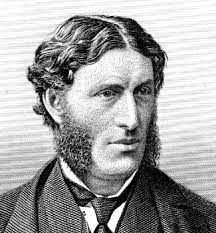
Matthew Arnold was a poet of
Victorian period.he was born on 24th of December,1822 in England.he
was a British poet and cultural critic who worked as an inspector of school.he
was the son of Thomas Arnold,The Headmaster of Rugby School.he had two brothers
namely Tom Arnold &William Delafield Arnold.Tom Arnold was a literary
professor and William Delafield Arnold was a novelist and colonial
administrator.he was famous in genres such as poetry:literary social and
religious criticism.Matthew Arnold has been characterized as a Saga writer,a
type of writer who chastises and instructs the reader on contemporary social
issues.
Culture And Anarchy is a
series of periodical essays by Matthew Arnold.which was first published in
Cornhill magazine in 1867:68.Anarchy is a controversial philosophical work.the
essay argues for a restructuring of England`s social ideology.it reflects
Arnold`s passionate conviction that the uneducated English masses could be
modeled into conscientious individuals who strive for human perfection through
the harmonious cultivation of all their skills and talents.Arnold`s famous
piece of writing on culture established his high Victorian cultural agenda that
remained dominant in debate from the 1860s until 1950s.a cultural condition of
Arnold`s thesis is that a state administrated system of education must be
replace the ecclesiastical programmed which emphasized rigid individual moral
conduct at the expense of free thinking and devotion community.
What is Culture:
In Culture And Anarchy,in the
essay Matthew Arnold tries to say the idea of culture.he introduces Culture as,
“The whole scope of essay is
to recommend culture as the great help out of our present difficulties;culture
being a pursuit of our total perfection by means of getting to know,on all the
matters which most concern us,’The best which has been thought and said in the
world.’and through this knowledge,turning a stream of fresh and free thought
upon our stock notions and habits,which we now follow staunchly but
mechanically.”
To show the significance of
culture he gave an example of American culture.he proposes to try and enquire
in in the simple unsystematic way,what culture really is,what good it can
do,what is our own particular need of it.and he seeks to find some plain ground
on which a faith in culture may rest securely.Arnold believes that culture is a
study of perfection.
He further adds that,
To conceive of true human
perfection as a harmonious perfection,as a general perfection,developing all
sides of our humanity and as a general perfection,developing all sides of
society.
Culture is considered not
merely as the endeavour to see and learn this,but also to make it prevail,the
moral,social and beneficent character of culture becomes manifest.as
religion,culture is also places in an internal condition.character perfection
is recommended in culture.perfection of culture is not possible while the
individuals remains isolated.
Thus,the notion of perfection
as culture brings us to conceive it:a harmonious perfection,a perfection in
which the characters of beauty and intelligence are both present,which unites
‘The two noblest of things:Sweetness and Light’.
Sweetness and Light:
The disparagers of culture
make its motive curiosity,sometimes,indeed,they make its motives mere
exclusiveness in vanity.the culture which is supposed to plume itself on a
smattering of Greek and Latin is a culture which is begotten by nothing so
intellectual as curiosity;it is valued either out of sheer vanity and
ignorance,or else as an engine of social and class distinction,separating its
holder like a badge or little from people who have not got it.no serious man
would call this culture or attach any value to it,as culture at all.
But there is of culture
second view,in which not solely the scientific passion,the sheer desire to see
things as they are,natural and proper in intelligent beings that appear as the
ground of it.there is a view in which all the love of our neighbours,the
impulses towards action help and beneficence the desire for removing human
error,clearing human confusion and diminishing human misery,the noble
aspiration to live the world better and happier than we found it,motives
eminently such as are called social come is as the part of grounds of culture
and the main and pre eminent part.
Then culture is properly
described not as having its origin in curiocity,but as having its origin in the
love of perfection,that is the study of perfection.it moves by the force,not
merely or primarily of the scientific passion for pure knowledge but also of
the moral and social passion for doing well.
The movement for culture is
of service,culture which believes in making reason and the will of God
prevail,believes in perfection,is the study and pursuit of perfection that is
no longer debarred by a rigid invincible exclusion of whatever is new from
getting acceptance for its ideas,simply just because they are new.
Religion says:
The kingdom of God
Like manner culture places
human perfection in an internal condition,in the growth and predominance of our
humanity proper as distinguishing from our animality.it places it in the ever
increasing efficiency and the general harmonious expansion of those gifts of
thought and feeling,which make the peculiar dignity,wealth and happiness of
human nature.
The idea of perfection as an
inward condition of the mode and spirit is at variance with the mechanical and
material civilization.the ides of perfection as a general expansion of the
human family is as variance with our strong individualism,our hatred of all
limits to the unrestrained swing of the individual`s personality our maxim of
every man for himself.
Doing As One Likes:
Culture is to be study and
pursuit of perfection that of perfection as pursued by culture,beauty and
intelligence.on the other words,sweetness and light are the main characters.
Arnold`s theory of sweetness
and light is full of antipathy against the rougher or coarser movements going
on around him.
Matthew Arnold started to
speak of culture,by insisting on our bondage to machinery,on our proneness to
value machinery as end itself,without looking it to the end for which alone,in
reality,it is valueable.in our common notions and talk about freedom,we
eminently show our idolatry of machinery.
Our middle class,the great
representative of trade and dissent,with its maxims of every man for himself in
business,every man for religion,dreads a powerful administration which might
somehow interfere with it.
After then to our working
class.that pressed constantly by the hard daily compulsion of material wants,is
naturally the very center and stronghold of our national idea,that it is man`s
ideal right and felicity to do as he likes.
Culture which simply means an
attempt to perfect oneself,if we light it shows us that there is nothing so
very blessed in merely doing as one likes.worship of the mere freedom to do as
one likes is worship of machinery,that really blessed thing to like what right
reason ordains.
Culture confers upon us,if in
embarrassed times like the present it enables us to look at the ins and outs of
things in this way,without hatred and without partially and with disposition to
see the God in everybody all round.
Two excellent rules of Bishop
Wilson`s for man`s guidance:firstly never go against the best light you
have,secondly take care that your light be not darkness.
Anarchy in Society:
Anarchy in Society:
|
||
Three Classes:
|
||
Barbarians
|
Philistines
|
Populace
|
In the very beginning Matthew
Arnold says that from a man without a philosophy no one can expect
philosophical completeness.therefore,he observes that in trying to get a
distinct notion of our aristocratic,our middle and our working class with a
view of testing the claims of each of these classes to become a center of
authority.
Philistines conveys a sense
which makes it more peculiarly appropriate to our middle class than to our
aristocratic.Aristocratic class called The Barbarians.The Barbarians had the
passion for asserting one`s personal liberty and the great natural stronghold.
Arnold Says that it is
notorious that our middle class liberals have long looked forward to this
consumption when the working class shall join forces with them.division of
English society two things are to be borne in mind.the first is that
since,under all our class divisions,ther is common basis of human nature.the
second things to be borne in mind that so far as we are
Barbarians,Philistines,or Populace,imagine happiness to consist in doing what
one`s ordinary self likes.
Finally,we can summaries that
from every walk of life some people must dedicate themselves to the pursuit of
perfection.the doors of perfection and culture are wide open to any really
dedicated soul from any three great divisions which Arnold
finds proper to sort out the people of England
But then it is essential that
man must strive to seek human perfection to establish his best self,and culture
would in the end,can find its public recognition.
click here to evaluate my assignment
click here to evaluate my assignment
Subscribe to:
Posts (Atom)